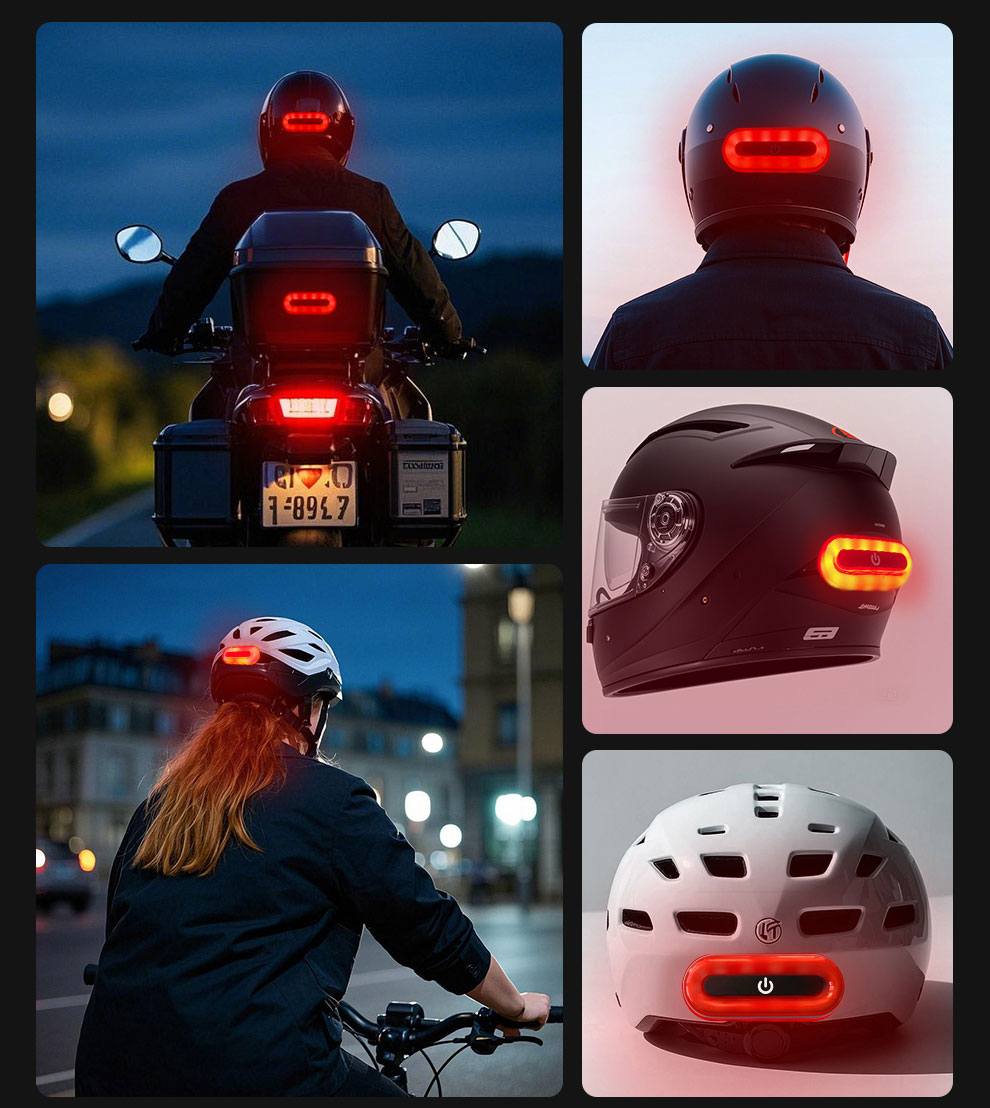
The Benefits of Motorcycle Helmet Tail Lights
Motorcycle helmet tail lights have emerged as a game-changer in rider safety and visibility, blending advanced technology with practical design. Here’s a comprehensive look at their key advantages:
1. Enhanced Visibility for Accident Prevention
Helmet tail lights significantly improve a rider’s visibility to other road users, especially in low-light conditions like nighttime, fog, or heavy rain. Bright LED lights mounted on the rear of the helmet ensure that motorists can spot motorcyclists from a distance, reducing the risk of rear-end collisions. For example, studies show that helmet lights with high-intensity LEDs can make riders up to 60–70% more visible compared to relying solely on bike-mounted lights. This is critical, as motorcycles are inherently less visible than cars due to their smaller size.
2. Improved Communication with Other Road Users
Many modern helmet tail lights feature turn signals and brake indicators, allowing riders to clearly communicate their intentions. These lights use distinct flashing patterns (e.g., slow or fast blinking) to signal turns or stops, helping drivers anticipate the rider’s movements. Wireless systems can even sync with the motorcycle’s electrical controls, ensuring real-time accuracy. This functionality is particularly useful in urban traffic, where sudden lane changes or stops are common.
3. Versatility and Adaptability
Helmet tail lights are designed for flexibility:
- Multiple lighting modes: Options like steady illumination, flashing, or strobe effects cater to different scenarios (e.g., steady lights for dark roads, strobe for high-traffic areas).
- Weather resistance: Waterproof and durable materials ensure reliable performance in rain or snow.
- Easy installation: Most models use adhesive mounts or magnetic clips, making them compatible with nearly any helmet type.
4. Energy Efficiency and Convenience
Rechargeable USB-powered lights eliminate the need for disposable batteries, offering eco-friendliness and cost savings. Low-power LED technology ensures extended battery life—some models last over 10 hours on a single charge. Additionally, lightweight designs (e.g., 280g helmets with lights) prevent neck strain during long rides.
5. Style and Personalization
Beyond safety, helmet tail lights allow riders to express individuality. Available in colors like red, blue, or white, they can match a motorcycle’s aesthetics or serve as a fashion statement. Some brands even offer customizable light patterns for group rides, enabling synchronized displays among riders.
6. Compliance with Safety Standards
Leading helmet tail lights meet certifications like CE, ROHS, and DOT, ensuring they adhere to global safety regulations. This guarantees that the lights are not only effective but also rigorously tested for reliability.
Conclusion
Motorcycle helmet tail lights are no longer optional accessories—they are essential tools for modern riders. By combining cutting-edge visibility, intuitive communication features, and user-friendly design, they address the unique risks faced by motorcyclists. As one rider noted, “With a helmet tail light, I feel safer and more in control, knowing I’m seen by everyone on the road”. Whether for daily commutes or adventurous rides, investing in a high-quality helmet tail light is a smart step toward safer, more confident motorcycling.
: LED helmet lights enhance visibility and reduce accident risks in low-light conditions.
: Turn signal integration improves communication with drivers.
: Waterproof designs and adhesive mounts ensure adaptability.
: Compliance with CE and DOT certifications guarantees safety.
: Customizable colors and lightweight materials enhance style and comfort.
: Rechargeable USB power and long battery life prioritize convenience.
: Studies link helmet lights to reduced collision rates.
: Magnetic mounts and synchronized patterns add versatility.
: Wireless integration improves signaling accuracy.
: Energy-efficient LEDs and multiple modes cater to diverse needs.